
- January 19th, 2026
- Dali, Yunnan, China
- Arch Journal
Stone, Light, and Time: The Architectural Resilience of Dali
An inquiry into the spatial logic and heritage preservation of Yunnan’s high-altitude sanctuaries.
In the high-altitude landscape of the Yunnan Plateau, architecture is not merely an aesthetic choice; it is a sophisticated response to the rigors of the Earth. At an average elevation of 2,000 meters, the city of Dali exists in a delicate balance between the 4,000-meter peaks of the Cangshan Mountains and the tectonic expanse of Erhai Lake. To understand Dali’s enduring appeal in 2026, one must first deconstruct the structural and spatial logic that has defined this region for over a millennium.
The Lithic Foundation: Thermal Inertia and Permanence
The vernacular architecture of the Bai ethnic group is characterized by its profound “lithic” quality. Unlike the timber-dominant structures of central China or the light, bamboo-based dwellings of the humid tropics, the Dali house is built to manage the extremes of a plateau climate.
The use of local cobblestone and Dali Marble (from which the term “marble” in Chinese, Dali-shi, originates) serves a critical environmental function: Thermal Inertia. These massive stone envelopes act as a natural heat sink, absorbing the intense ultraviolet radiation of the Himalayan sun during the day and slowly radiating that warmth back into the interior during the sub-zero nights. This is the architecture of permanence—a structural heavy-weight that provides a psychological sense of “sanctuary” for the modern traveler seeking respite from the ephemeral nature of urban life.
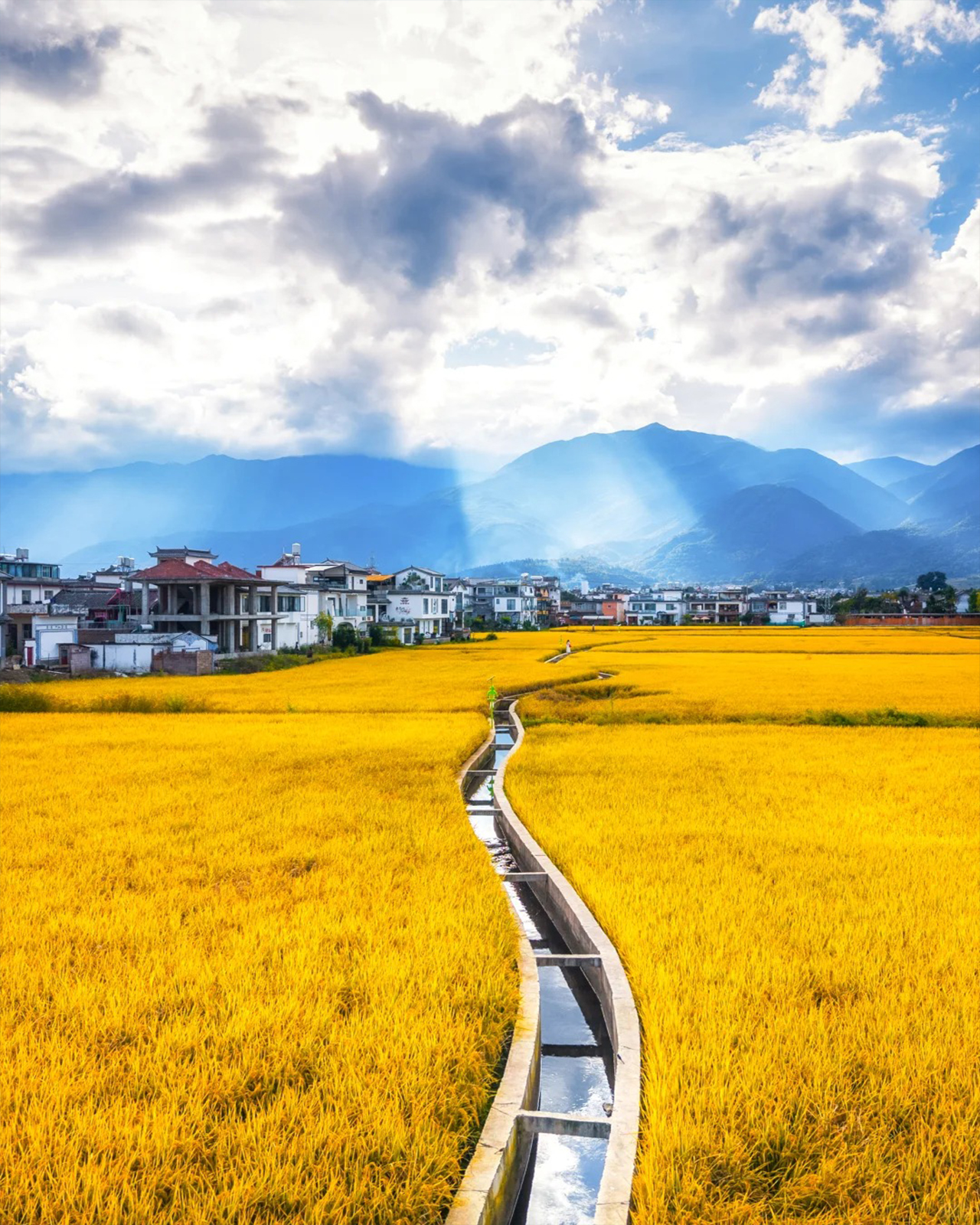
The Curation of Void: The Sky-well as an Environmental Tool
The defining spatial element of the Dali residence is the Tian-jing, or Sky-well. In the context of architectural history, the Sky-well is a masterclass in passive environmental design.
In a region where the sunlight is exceptionally sharp and direct, the Sky-well functions as a diffuser. The central courtyard “captures” a column of air and light, allowing it to reflect off the whitewashed “Screen Walls” (Zhao-bi) that characterize Bai homes. This system creates a soft, indirect luminosity that illuminates the deep timber galleries without the heat gain of direct exposure.
For the remote worker or the creative mind in 2026, these spaces offer a rare commodity: Visual Silence. The Sky-well focuses the inhabitant’s gaze upward toward the sky, effectively filtering out the noise of the surrounding world and creating a micro-climate of absolute stillness.
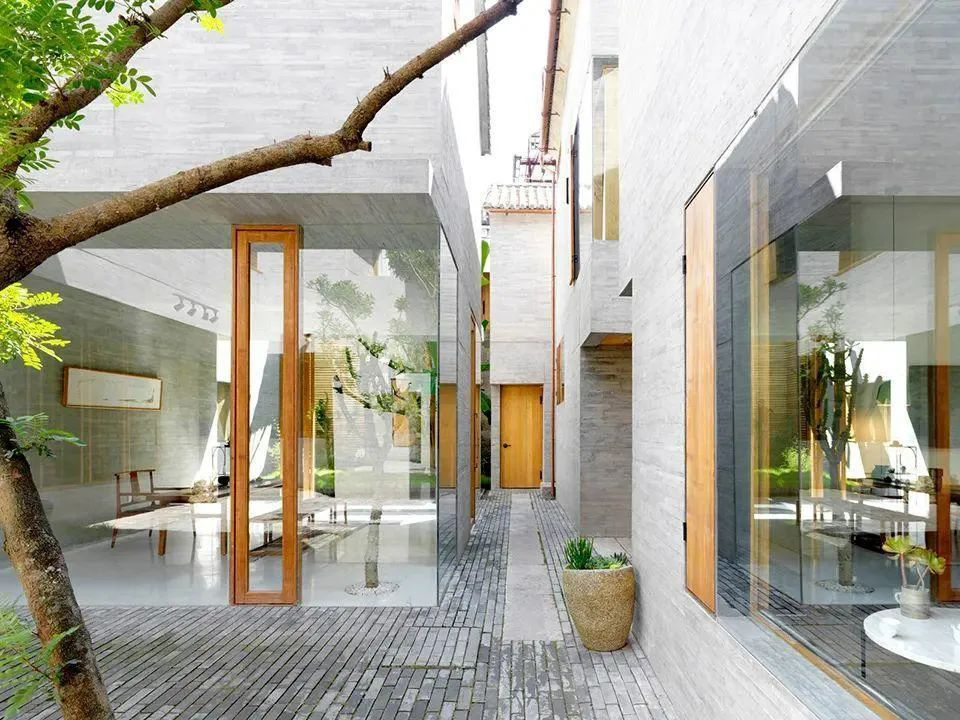
The Tea Horse Road: A Legacy of Nomadic Infrastructure
Dali’s current status as a sanctuary for the “Global Nomad” is not a modern accident, but a continuation of its role as a pivotal node on the Ancient Tea Horse Road. The town’s infrastructure was historically designed to facilitate movement and pause.
From the fortified gates of Shaxi to the merchant courtyards of Xizhou, the architecture of Dali has always been optimized for the “long-stay.” The generous proportions of the guest wings and the strategic placement of communal tea-rooms reflect a civilization that mastered the art of hospitality centuries ago. In the post-2026 travel era, characterized by visa-free access and a shift toward “slow travel,” these ancient nodes are proving more resilient and relevant than modern, purpose-built resorts.
Conclusion: The Future of Heritage
As we navigate the complexities of 21st-century travel, the Dali Plateau offers a blueprint for Spatial Healing. It is a region where the built environment does not compete with the landscape but enhances the human experience of it.
Through a rigorous selection process, Arch Travel identifies the most architecturally significant sanctuaries within this region. We bridge the gap between the seeker and the space, ensuring that every journey is anchored in the authenticity of stone, light, and time.

Operational Protocol for 2026 Bespoke Curation
To ensure the integrity of our cultural and spatial explorations, Arch Travel employs a structured consultation model:
Spatial Audit: We evaluate your travel requirements through the lens of architectural preference and sensory needs.
Curation Commitment: A $500 planning fee is required to initiate the bespoke design process. This fee is a commitment to the depth of research required to craft a seamless, private itinerary and is fully credited toward the final journey cost.
Seamless Execution: Our ground team on the Yunnan plateau ensures that the theoretical beauty of our plans is matched by flawless logistical execution.
Make this itinerary yours
Each and every ARCH trip is tailored exactly to who you are and what you want to do. So tell us about yourself and we’ll create something that’s entirely you.